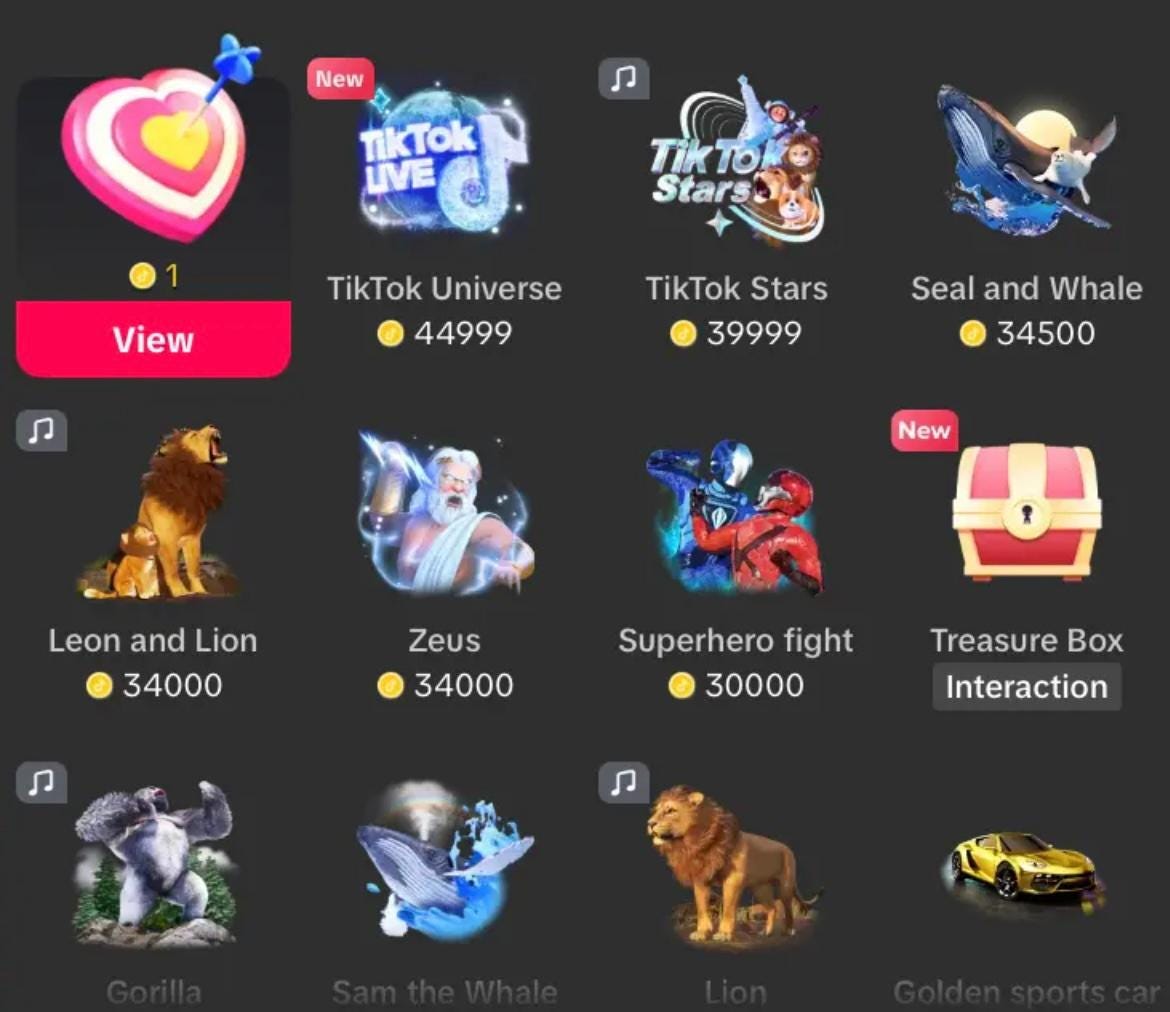
A “Universe” is $600 USD… For a gift… To someone you’ll never meet or know.
What started in the corners of Asian livestreams has become the defining economic strategy of a generation. Digital panhandling isn't just crossing cultural boundaries anymore. It's becoming the default.
We've dressed it up. We've celebrated it. But let's call it what it is: digital panhandling isn't the future of work. It's work collapsing in real time, and we're all watching.
I’ve started thinking about this recently, as in the past month or so I’ve joined X, started a Substack and a YouTube channel all as an “artistic outlet” rather than a means to make money. And I believe this is the sole reason why I actually enjoy doing it, because when I’m in an X space, I’m not “lot lizarding” myself.
What I have noticed, however, is that there is actually a ton of selling done to those online.
When I say this, I’m *not bashing* anyone who sells access to their Substack or allows paid subscriptions/memberships to their content. I’m more so referring to those who beg for money without providing value, which is increasingly prevalent.
From Villages to Virality
Five years ago, if you mentioned livestream begging, people pictured someone in rural China eating dinner for tips, or a woman in the Philippines singing karaoke for virtual roses. It felt distant, weird, kind of sad.
Now open TikTok any evening and you'll find Americans livestreaming themselves doing absolutely nothing, hoping strangers will send them cartoon gifts worth actual pennies. These aren't influencers with brands. They're not artists with vision. They're just there because it might pay better than their day job.
This isn't cultural exchange. It's economic desperation finding the same outlet everywhere.
"Quitting the 9 to 5" to Beg Online
The death of stable work created this myth that you can just go online and monetize being yourself. But scratch the surface of those "I quit my job" videos and you'll find something much darker.
A whole generation isn't quitting to build companies or create courses. They're quitting to livestream their existence for digital scraps. Some pretend to be video game NPCs. Some cry on cue. Some just sit there and wait. The product isn't entertainment. It's vulnerability. The payment isn't money. It's micro-transactions from strangers.
We used to stigmatize panhandling on street corners. Now we call it "successfully monetizing your social media presence."
A recently viral example of this is Connor Hubbard, who built nearly a million TikTok followers by filming his morning commute, desk work, and lunch breaks. He became famous for being "the most boring man on the internet," offering viewers a mirror of their own mundane corporate existence. But when he quit his job in early 2025 to become a full-time creator, everything collapsed. His audience had followed him because he represented their reality. The moment he stopped being them, they stopped caring about him.
Desperate to monetize his fading relevance, Connor started demanding expensive TikTok gifts just to interact with viewers during livestreams. A $13 "Galaxy" gift to get a question answered. The man who built his brand on relatability was now literally charging people for basic human interaction. His fans felt betrayed, his views plummeted, and he was left manufacturing drama just to stay visible.
This is the trap: you build an audience by being authentic, then discover authenticity doesn't scale. So you start performing authenticity instead. And when that fails, you just start performing desperation.
The Platform's Cut
Here's the brutal math that nobody talks about: TikTok keeps 50% of all gift revenue. Twitch takes 30%. YouTube grabs 30% of Super Chat donations. These platforms have built trillion-dollar valuations by positioning themselves as the benevolent infrastructure for the "creator economy," but they're actually sophisticated extraction machines.
When someone sends that $13 Galaxy gift to Connor, he sees maybe $6.50. The platform pockets the rest for providing the privilege of hosting his digital panhandling. Meanwhile, TikTok's parent company ByteDance reported revenues of $120 billion in 2023, built largely on the backs of creators who average less than $200 per month from the platform.
This isn't partnership. It's sharecropping. The platforms own the land, the tools, and the distribution. Creators provide all the labor, take all the personal risk, and get a fraction of the value they generate. When creators burn out or their content stops performing, platforms simply move on to fresh talent. The asymmetry is staggering.
AI Enters the Game
Here's where it gets truly dystopian: AI is about to make begging scalable.
Picture 100 versions of yourself streaming simultaneously, each one optimized for different audiences, speaking different languages, never sleeping, always performing gratitude for tips. That's not some distant future. That's next year's product launch.
We're heading toward a world where synthetic personalities will run 24/7 emotional manipulation campaigns, fine-tuned by machine learning to maximize sympathy and donations. Real people will rent out their faces and voices to bots that fake distress, flirt on command, and cry at optimal intervals to extract more gifts from more users across more platforms.
The gig economy wasn't dehumanizing enough. Now you don't even need to be human.
Algorithmic Emotional Coercion
What we're witnessing isn't just economic desperation. It's the systematic replacement of genuine human empathy with algorithmic emotional manipulation.
Platforms have weaponized our natural impulse to help others in distress. The algorithms learn which emotional triggers generate the most donations: tears work better than laughter, desperation outperforms joy, personal trauma gets more engagement than creative content. So the system rewards creators for performing mental health crises, family emergencies, and financial catastrophes whether they're real or manufactured.
This creates a feedback loop where creators learn to optimize for emotional extraction rather than value creation. The audience thinks they're helping real people, but they're actually training AI systems to become better at exploiting human compassion. Viewers lose agency over their emotional responses because the algorithm has studied exactly which buttons to push and when.
The result is an emotional economy built on coercion rather than connection. People aren't choosing to support creators based on merit or genuine interest. They're being manipulated into guilt-based transactions that drain both parties of authentic feeling.
The Math Doesn't Work
The income data tells the real story. According to creator economy research from 2024, the median earnings for creators across all platforms is $104 per month. Only 0.1% make enough to replace a minimum wage job. The vast majority are earning less per hour than they would at McDonald's, but without health insurance, workers' compensation, or job security.
The sustainability crisis is even worse. Creator burnout rates hit 73% by 2023, with most citing the emotional toll of constant performance and the impossibility of consistent income. A study of livestream panhandlers specifically found that 89% reported higher anxiety and depression after six months of regular streaming for donations.
But here's the kicker: despite all this emotional labor and mental health sacrifice, gift-based income models show almost no correlation with long-term financial stability. Research from the University of Southern California found that creators relying primarily on viewer donations had the highest rates of financial stress and the lowest rates of wealth accumulation compared to those with traditional employment.
The pity economy doesn't actually lift people out of poverty. It just makes poverty more visible and more emotionally manipulative. When your income depends on strangers feeling sorry for you, you can never stop being pitiful. You can never actually succeed, because success would end the performance that generates income.
The Family Fracture
There's another casualty in this digital panhandling economy that we're not talking about: the family unit itself.
When your income depends on performing vulnerability for strangers online, you can't really turn it off. The livestream doesn't pause for dinner. The audience doesn't care that your kid needs help with homework. The algorithm doesn't recognize weekends or bedtime stories.
We're watching people choose parasocial relationships with anonymous donors over the messy, unprofitable work of building actual relationships with the people in their homes. Why invest emotional energy in your family when a thousand strangers will pay you for the performance of caring about them instead?
Think about what this does to children growing up in households where mom or dad is constantly "on" for the camera, where family conversations get interrupted because a viewer just sent a big donation, where the emotional bandwidth that used to go toward raising kids now gets spent managing an audience of lonely strangers.
The traditional family model already strained under economic pressure. Now we've created an economy that actively rewards you for broadcasting your private emotional life to anyone except the people you live with. We're incentivizing the commodification of intimacy itself.
Your attention, your emotional availability, your capacity for care - these used to be family resources. Now they're income streams. And there's only so much to go around. The cruelest irony is that digital panhandling often starts as a way to provide for family, but the medium demands you turn your back on them. You can't build genuine relationships while performing authenticity for tips.
We're creating a generation that learns to monetize emotional labor instead of investing it in the people who will actually be there when the internet moves on.
Where This Leads
This doesn't end with more creators striking it rich. It ends with AI panhandlers flooding every platform, viewers unable to tell if they're supporting a person or a program, and entire generations defaulting to livestreaming their sadness because every traditional path has been blocked.
The phrase "creator economy" used to suggest creativity. Now it's starting to suggest catastrophe.
The Real Picture
Look, digital panhandling makes perfect sense given the circumstances. It's not the individual's fault. It's systemic design. But if we keep walking this path, where dignity gets streamed, monetized, and eventually replaced by code, we'll eventually realize something stark:
The internet didn't democratize opportunity. It just gave everyone a digital cup to shake.
Building Different Systems
Here's what's maddening: we actually know how to fix this. But the solution isn't tweaking the current platforms or asking them to be more generous with revenue shares. The solution is building fundamentally different economic structures.
Cooperative platforms where creators collectively own the infrastructure and share revenues equitably. Decentralized networks where users control their own data, algorithms, and monetization without platform intermediaries taking cuts. Creator-owned systems where the people making content also own the means of distribution.
These aren't utopian fantasies. Worker cooperatives already exist in other industries and consistently show higher job satisfaction, better working conditions, and more equitable wealth distribution than traditional corporate structures. Platform cooperatives like Stocksy and Resonate have proven the model works for digital creative work.
The technology exists. Blockchain infrastructure can handle decentralized content distribution. Smart contracts can automate equitable revenue sharing. DAOs can provide democratic governance structures for creator communities.
What we need is the political will to build economic systems that serve creators rather than extract from them. Systems that reward sustainable value creation over emotional manipulation. Systems that protect human dignity instead of commodifying desperation.
The current platforms won't reform themselves. They're too profitable as extraction machines. Real change requires building parallel infrastructure that puts creators first. Not emotional labor markets, but actual economic alternatives.
The internet could still democratize opportunity.
We just have to stop letting extraction platforms convince us that digital sharecropping is entrepreneurship.